
Prove it works.
Or prove it doesn't.
Come with a problem, a goal, or an aspiration. ΔN1 helps you find what is true for your body, pursue it with a plan, and adapt as life changes.
What you get:
- Evidence about what works for YOUR body—not averages
- Honest feedback when something isn't working
- A plan that adapts when life changes
No guilt. No guesswork. Just proof you can act on.
Works with HealthKit (iOS), Garmin, Whoop, and Google Calendar
The real problem isn't your data.
You have the devices. You track the metrics. The problem is nobody connects what you do to what actually changes—for you.
Your goals aren't your metrics
Your HRV went up. Do you feel better? Your sleep score improved. Are you less tired? When you optimize for a number, you lose sight of what you actually wanted to change.
Nobody shows what failed
Every app celebrates wins. Nobody tells you the supplement that did nothing, the protocol that made things worse, or the habit you could safely stop. Knowing what doesn't work is half the answer.
One-size-fits-none
“Take magnesium before bed.” Based on what? Population averages don't account for your schedule, your stress, or your biology. What works for a podcast host won't necessarily work for you.
What exists vs. what's missing.
Wearables track. AI chatbots advise. Neither connects your actions to your outcomes over time.
| What you need | Wearables | AI chat | ΔN1 |
|---|---|---|---|
| Know what to do today | Shows scores | Generic tips | Specific plan, your constraints |
| Test if something works | Track metrics | “Try this” | Structured experiment, clear answer |
| See what failed | Hidden | Forgotten | Visible, with evidence |
| Adapt when life changes | Start over | Ask again | Detects drift, updates plan |
| Find root causes | Single metrics | Surface-level | Traces chains across domains |
Whoop, Oura, Garmin, Apple Watch—great at collecting data. ΔN1 connects to them and turns that data into decisions.
Averages aren't answers.
Population studies tell you what works on average. ΔN1 finds what works for you.
The Discovery Loop visualization appears here
Keep what holds up. Drop what doesn't. Stop guessing.
From signal to action.
Ask questions in plain language. Get answers backed by your patterns—and drafted plan updates you can accept or modify.
(Screenshots from demo data — illustrative example)

Your daily command center. Recovery score, readiness, personalized daily plan—everything you need to know at a glance.
Your first 7 days
No overhaul. Just enough signal to stop guessing—then one small test at a time.
Set your goal + constraints
Tell the coach what you’re trying to change and what’s realistic (kids, travel, schedule, budget). The plan starts with your life—not an ideal one.
Connect your data
HealthKit/Garmin/Whoop + Calendar. You don’t need perfect logging—just enough consistency to see what’s worth paying attention to.
See early hypotheses
Early patterns show up clearly labeled—with confidence levels—so you know what’s “worth watching” vs. “ready to test.”
Run one small experiment
Pick one change with a clear timeline and outcome. If it helps, keep it. If it does not, stop. No more endless "just in case" additions.
What it actually looks like.
(Demo data — illustrative example)
Start with reality, not an ideal week
You: "My baseline is chaos: kids, work, travel, and uneven sleep. I can do a few things consistently, but I cannot run a rigid plan."
System: "Got it. We start with what is realistic on your hardest days, then build from there."
Accepting constraints
What's actually moving the needle
System: "I've been watching your patterns. Three things stand out:"
"Sometimes it's a keystone—one thing that unlocks everything else. Sometimes it's a combination. Sometimes the answer is just 'stop doing X.' For you, right now: drop that trial, protect the morning walk."
Pattern emerging See how it works →
What we've ruled out (as important as wins)
The failures are just as valuable:
- Morning walk: Keystone confirmed — the one thing to always protect
- Ashwagandha KSM-66: No effect — dropped it, saved $40/month
- Rigid gym schedule: Rejected — distributed movement fits your life better
- Late-night meal timing trial: Inconclusive — not worth extra tracking right now
Then chaos hits: kids up 3x last night.
"Recovery is tanked. Not a failure—just a constraint. Swapping HIIT for a walk. Lowering expectations for today. You don't have to fight this. Just do the one thing you can always return to."
Constraints accepted
Your playbook grows
14 validated findings. 6 rejected. The system now knows:
- Morning walk before 8am: Keystone — cascades into better sleep, energy, focus
- Caffeine cutoff: 2pm — not 4pm, not noon. Tested and validated for you.
- Sleep debt recovery: 2 nights — not 1. Your biology needs the extra day.
- Low-value interventions: Dropped — reclaimed attention and reduced noise
The plan now adapts automatically based on this accumulated knowledge. No more guessing. No more "just in case" additions.
"Next question: Is your afternoon slump food timing or sleep debt? One experiment. Two weeks. Then we'll know."
Playbook compounding
A plan that adapts as you go.
A living plan built around your goals and constraints. It drafts updates based on your data and your life—then you accept or modify. Most days: 2–3 minutes of check-ins.
Specific, not vague
“30 min zone 2 at 7am” not “exercise more.” Real actions with real timing, built around your constraints and what we’ve learned about your biology.
“Tuesday 7am: 30-min walk outdoors (circadian reset). Skip if recovery is low.”
Tracks outcomes
The plan knows what to measure. When you follow an action, the system watches what happens next—connecting your choices to your results automatically.
“You’ve done the morning walk 8 of 10 days. Afternoon focus scores improved.”
Adjusts fast
When your recovery tanks, a plan update is ready before you wake up—drafted and waiting for a single tap to accept or modify. Travel week? Drafted around your calendar. Something stops working? We notice and recommend the next adjustment.
“Recovery dropped—drafted update: swap HIIT for yoga. Next hard workout: Thursday (if recovery rebounds).”

Behind the conversation is a lab.
You talk naturally. In the background, dozens of systems are tracing candidate cause-and-effect chains across your entire week—finding connections that span sleep, energy, food, exercise, and stress.
Cascade chains
Most tools stop at one-step correlations. We trace candidate chains: A → B → C → D. Correlations become hypotheses; hypotheses become experiments. Sometimes there's a keystone—one lever that unlocks the rest. Sometimes it's a combination. Either way, you find out.
"Coffee after 2pm → brain fog at 4pm → skipped workout → poor sleep → tired tomorrow. Testing whether the coffee is the root cause."
Early warning
When multiple signals drift at once—sleep, recovery, resting heart rate, energy—the system catches it before you feel it and drafts a plan update for you to approve.
“Same pattern as before your last cold. Swapped HIIT for a walk.”
Drift detection
New job? New stress? New season? The system notices when your patterns shift and stops trusting old conclusions. What was true last month gets revalidated for who you are now.
“Your sleep patterns shifted three weeks ago. Recalibrating what I’ve learned.”

This is the lab in plain English: trends, anomaly alerts, confidence, and a next step.
Your data, connected
The system connects daily signals and context: meetings, travel, meal timing, symptoms, training load, and recovery.
Wearables
Apple Watch (via HealthKit), Garmin, Whoop—we connect to your existing devices and pull sleep, recovery, activity, and heart data automatically.
Sleep stages, HRV, resting heart rate, steps, workouts, recovery scores
Daily Logging
Tell us what you ate, how you trained, how you feel. Natural conversation, not forms. A few minutes a day builds a complete picture.
Meals, energy, mood, symptoms, workout details, interventions you are testing
Labs & Documents
Upload blood work when you get it. We connect lab values with everything else—mapping how your biomarkers relate to how you feel.
Blood panels, hormone levels, nutrient markers, metabolic tests
Photos & Selfies
A weekly selfie becomes passive tracking: body composition trends, recovery indicators, changes that show up even when you're too busy to log.
Body composition, posture trends, visual recovery signals
Questions
Required: For iOS: HealthKit access required (Apple Watch data syncs automatically). For Android: Garmin or Whoop required.
Helpful: Google Calendar (helps understand your schedule).
Start with what you have. More consistency just makes the learning faster.
Yes. Not vague advice—specific actions that fit your schedule, your constraints, and what's actually happening with your body that day.
If a change is needed, it drafts an update and asks for your approval (Accept/Modify). No autopilot changes.
That’s the point. ΔN1 doesn’t punish inconsistency—it adapts to it.
When your patterns shift, the system re-checks what it thought it knew and drafts plan updates that fit the week you’re actually having.
No. ΔN1 is a personal wellness tool, not a medical device. For medical concerns, see your doctor.
Your data is yours. Export anytime. Schedule deletion anytime—permanently deleted after 30 days.
Your data is never used to train AI models. We make money from subscriptions, not from harvesting your health data.
We don't sell your data. Ever. See our privacy policy.
Insights come with confidence levels. Lower confidence means “worth watching.” Higher confidence means “ready to test.” Experiment-backed results become validated truths—repeatable changes in your data that the plan can safely reuse.
No. ΔN1 works across sleep, stress, training, nutrition, schedule, and daily behavior. Supplements are optional.
If a supplement question matters to you, we can test it. If not, the system still helps you improve with other interventions.
No. The goal is less tracking over time, not more.
ΔN1 asks for short bursts of tracking when it is the fastest way to answer a question, then backs off. When something is settled, you can mark it as "good enough," and the system stops nudging that topic unless patterns drift or you ask to revisit it.
The Team

Mark Koivuniemi
Founder & CEO
Engineer with nearly a decade at the intersection of AI and healthcare. Built DeltaN1 to answer the question wearables leave open: what should I actually do differently?

Andrew Koivuniemi, MD, PhD
Co-Founder & Medical Advisor
Board-certified neurosurgeon with deep research roots in neural systems, signal processing, and human physiology. Over 200 citations across neuroscience and biomedical engineering.
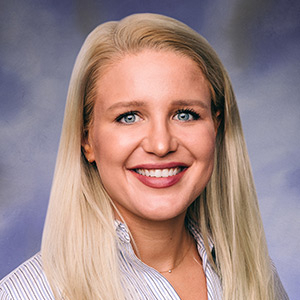
Kelly Grott, MD
Co-Founder & Medical Advisor
Board-certified anesthesiologist and pain management specialist. Frontline clinical experience in patient monitoring, pharmacology, and individualized care.
Join the Waitlist
Bring a problem, goal, or aspiration. Leave with truth, a plan, and a clear next step.
Your data stays yours. US residents only for now.
Questions? hello@deltan1.com